
April 27, 2025
This is an excerpt from a book I am writing. Please subscribe, I plan to write daily. And any feedback you have is much appreciated. Writing in this “live” format with instant feedback gives me much more motivation to maintain the practice. I really appreciate your participation in the creation of this book.
I keep getting lost on side trails as I try to tell this story of how I manifested a million dollar business! A good problem to have I suppose. You end up collecting a lot of interesting experiences when you walk 20,000 miles and live a non-traditional, dirtbag life.
I want to share this secret that I’ve held close to my chest. I’ve not spoken about my ideas surrounding manifestation and the nature of reality publicly mostly because it makes me sound like one of the new-age hippies. You know the type. They smell like patchouli, only wear 100% organic hemp, have an entire room dedicated to crystals, and are always going on about what their guru of the month told them. Everything is love and light and it’s all good. Just willfully ignore all the negative aspects of life and you’ll be in bliss! “Why are you so worried about money man, the universe will provide!” They always conveniently leave out their trust funds, alimony checks, and rich supportive families they can rely on if things go south.
People accuse me of being a trust fund kid when they see that I travel full time. This pisses me off to no end. I get triggered when I am unjustly accused, likely because my father was unjustly imprisoned in China for speaking up for freedom and Democracy. And I get triggered when people discount all of my hard work and sacrifice.
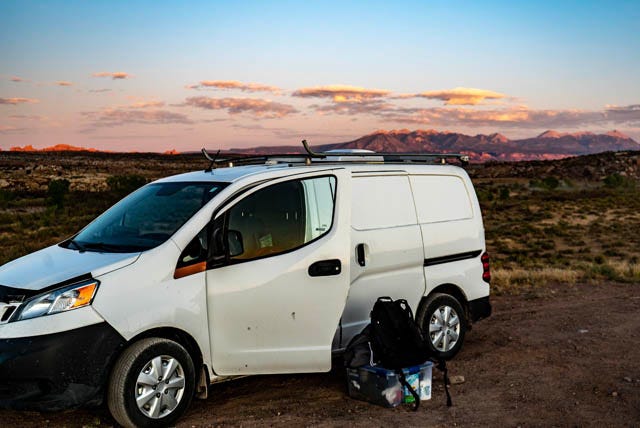
They only see the end product now, not the decades and all the sacrifices made to build my current lifestyle. I spent six years in the US Army Infantry and signed up to kill and die for this country just so I could graduate college debt free, because I knew I wouldn’t have the freedom I desired if I were saddled with student loan debt. I have lived with roommates for most of my life in order to save money, and have never owned a home. I have never owned a car that wasn’t at least 10 years old, the most expensive of which was a 2009 Nissan NV200 that I bought for $7,000. I would live out of that tiny van for the next two years in order to save money to fund my adventures. Previous to that I drove a 2005 Honda Civic which I bought for $4,500(and sold for $3,500. Honda’s really maintain their value)!
To be fair I have received help from my family, help that most people couldn’t count on in this world. My grandma started a college fund that helped pay for a year of college before I joined the Army. My mom and grandma regularly give me money for my birthday and Christmas and helped me open my gym. I know I have a place I can stay in Missouri if I ever need it. So I am certainly not without privilege. I fully understand and appreciate how much more opportunity I have access to by virtue of living in the US as compared to many other parts of the world. This is part of why I feel so strongly now in the need to defend our constitution and defend immigrants from this tyrannical regime.
The US is seen as a dream place to live, a place where you can come and work hard and really make something of yourself. Now we are punishing hard working immigrants who have done nothing wrong simply because of the vile racist and hateful beliefs of the base which trump needs to pander to. Just as Hitler scapegoated the Jews, the trump regime now scapegoats immigrants. These immigrants are not criminals, murderers, or rapists. They are the most hard-working amongst us. The people who will do the dirty, low paid jobs that no US citizen will do. Our country runs off of cheap immigrant labor. Our country became the economic and military powerhouse it is today because we welcomed immigrants from all across the world.
Wow, I just performed a google search to find some stats to back up my claim that immigrants commit less crimes than US citizens and they scrubbed the NIJ.gov website which on Jan 1, 2025 said this “Undocumented Immigrant Offending Rate Lower Than U.S.-Born Citizen Rate”. Try it yourself, google: nij.ojp.gov/topics/articles/undocumented-immigrant-offending-rate-lower-us-born-citizen-rate That webpage is GONE! It’s still archived in Google search, and older versions are saved, but the live site is scrubbed!!! Archived page from Jan 1, 2025: https://web.archive.org/web/20250101002950/https://nij.ojp.gov/topics/articles/undocumented-immigrant-offending-rate-lower-us-born-citizen-rate
During this time, undocumented immigrants had the lowest offending rates overall for both total felony crime (see exhibit 1) and violent felony crime (see exhibit 2) compared to other groups. U.S.-born citizens had the highest offending rates overall for most crime types, with documented immigrants generally falling between the other two groups.
To reverse course now not only unjustly punishes millions of immigrants who have done nothing wrong, who are here to try to work hard and make a better life for themselves, it will also irrevocably damage our economy and destroy our national defense capability. “Approximately one-third (31.2%) of active-duty military members in the US self-identify as belonging to a racial minority group”. We’ve been in a recruiting crisis for a decade. The military has not been able to meet its recruiting goals. It’s only going to get worse under this regime. It wouldn’t surprise me if they brought back conscription to sate their blood lust with the new wars with Greenland, Canada, Mexico, and Iran they’re itching to start.
And before a MAGAT comes in to say that recruiting numbers are up under trump. This has nothing to do with trump. This is because under Biden they finally removed the GENESIS system which made it hell for recruits to enter because it often surfaced old medical data, and flat out wrong medical data which the recruit then needed to spend months to years appealing and getting waivers for. Many 18 year olds just don’t have the patience for that so they drop out of the recruiting pipeline. I expect we’ll see a sharp drop in recruiting numbers in another year or two. Or maybe not. After all, military recruiting always improves in times of economic distress. Since so many jobs and businesses will be closing due to tariffs the military might see record applicants.
In 2020 I worked as a wildland firefighter on the Sawtooth Hotshots, performing grueling manual labor with 16+ hour shifts in 100 degree heat next to raging wildfires. I took this job to save money so I could travel SE Asia and because it sounded like a badass adventure. Hotshot crews are considered the toughest crews in wildland firefighting and have a similar prestige as Special Operations in the military. For years I’d wanted to join US Army Special Forces as a 18D, combat medic. The motto of Special Forces, also known as the “Green Berets” because of their distinctive green beret headwear is “De Opresso Liber.”
Even writing this now I can feel the tingling of goosebumps up my spine. Since this chapter is full of woo-woo topics I’ll share more of my more “out there” beliefs. I have a great intuition. I trust my gut wholeheartedly and it’s never steered me wrong. Since about 2015 I’ve had a deep gut level instinct that I needed to prepare and train myself for … something. My instinct said that whatever this something was it would be really bad, very violent, and inescapable. That’s around the time that I just could not focus anymore on a “normal life.” It felt totally pointless. When I was younger, back in the college days I made plans to have a successful business and buy a home and do all of that.
Past about 2015 I simply could not. My gut told me that there was no future to build for. That very soon things we would be facing an apocalypse(in the traditional Greek definition, of “a great revealing”). And in this revelation the old world order would collapse, so it was a huge waste of time to build for a future that would soon come crumbling down.
De Opresso Liber
Every year I felt the need to re-join the Army, specifically as a 18D Special Forces medic so that I would have all the skills I needed to navigate this apocalypse. Still though it’s a big commitment and I was never able to pull the trigger. The 18D pipeline takes a minimum of two years and then I’d have an additional six year commitment which would likely include multiple combat deployments. My main issue is that I didn’t want to kill some poor goat herder in a god forsaken place. I’d matured enough to realize that the US wasn’t the good guy and that we were killing so many people around the globe that wouldn’t be fighting us if we simply left them alone and weren't occupying their country. I’d matured enough to realize that there’s no glory or honor in murdering an Afghan teenager who was so poor that he would fire an RPG at a US convoy for $20 from the Taliban.
Two of my friends from my old unit in Missouri would go on to become 18B, SF weapon sergeants. They have wild stories from Ukraine and Syria the last time I talked to them. But when I asked, “should I give up my life of travel and freedom to join SF” they told me no. That it’s still the Army, filled with Army bureaucracy and tedious BS. It’s a cool job but having the freedom to travel the world is more enjoyable.
The U.S. Army Special Forces, commonly known as the Green Berets, were officially established on June 19, 1952, predating John F. Kennedy's presidency. However, Kennedy was instrumental in their rise to prominence, authorizing the distinctive green beret as their official headgear in 1961 and expanding their role significantly. Kennedy valued their unconventional warfare capabilities and counterinsurgency expertise, which aligned with his strategy for confronting communist expansion. During the Vietnam War, Green Berets were among the first U.S. troops deployed, operating in small teams to train and advise South Vietnamese forces, conduct special reconnaissance, execute direct action missions, and implement the Village Defense Program (later known as the Civilian Irregular Defense Group program). Their counterinsurgency approach emphasized building relationships with indigenous populations and developing local defense capabilities, embodying their motto "De Oppresso Liber" (To Liberate the Oppressed).
The mission of Special Forces speaks to my soul. To liberate the oppressed. Their job is to be diplomats and doctors and teachers and warfighters, all wrapped together. Their mission is highly independent and the most entrepreneurial of any in the US military. The small 12 man teams are often sent into remote locations with little US presence and are tasked with creating battalion sized elements with 400-600 indigenous troops. In short, Special Forces are trained to be guerilla fighters and force multipliers and have been used by the US government to fight clandestine insurgency warfare in an effort to depose foreign governments who were aligned against the US.
I fantasized about being deployed into China with US Army Special Forces to topple the tyrannical CCP government and avenge my father. How ironic it is now that China is one of the places I’m looking to flee to, as they will protect me from the long arm of the US government.
During the Salvadoran Civil War (1979-1992), U.S. Special Forces played a controversial advisory role under significant political constraints. Limited by Congress to a maximum of 55 military advisors in-country, Green Berets trained the Salvadoran military in counterinsurgency tactics, intelligence gathering, and small-unit operations against leftist FMLN guerrillas. Unlike their more direct combat role in Vietnam, they were officially prohibited from participating in combat operations, focusing instead on professionalizing the Salvadoran forces. However, controversy emerged over American complicity in human rights abuses, particularly after Salvadoran units trained by U.S. personnel were implicated in civilian massacres, most notoriously the El Mozote massacre in 1981 where approximately 800 civilians were killed. Further controversy stemmed from allegations that some advisors exceeded their mandated role by accompanying Salvadoran units on combat missions, and from the broader question of U.S. military involvement in a conflict characterized by widespread human rights violations.
Funny how these actions reverberate through history and come back to bite us, doesn’t it? Just like how our arming of the Mujahideen in Afghanistan against the Soviets would eventually lead us to fighting those very same men and weapons that we supplied to them. Karma is real. And we will not escape the karma of all of the violent actions that this country has taken through its short and violent history.
My gut told me that I needed to learn the skills of irregular warfare. If you’ve paid attention it’s not been difficult to see the direction that our politics and government has been taking. My gut said that I’d need these skills soon.
In 2020 I almost joined. I’d been chatting with a recruiter based out of Utah and had sent him my birth certificate, college diploma, and DD-214. The next step was to come down and take an informal PT test and interview at the unit. That was the same time that I got the job offer from Sawtooth. At the time I was still a relatively weak runner so I decided to give myself a summer working on Sawtooth and then join SF. I figured working a season on a wildfire crew carrying a 55lb pack around the woods doing manual labor all day would be great prep for the rigors of SFAS(Special Forces Assessment and Selection).
If you’ve read David Goggin’s book, “Can’t Hurt Me,” this is the same job that he worked after leaving the SEALs. “Man, this is some of the hardest fuckin work I've ever done in my life.” Goggins was on Helena Hotshots and actually never completed a full season. I haven’t met anyone who has worked with Goggins who has anything good to say about him, aside from commenting that he would do extra PT and extra runs in the mornings, I’ll just leave it at that.
The physical standards for Sawtooth were every bit as rigorous as those for Special Forces. You were expected to come in running a 6 minute mile, be able to do 60+ push-ups and sit-ups in one minute, and do 20+ pull-ups. The most important test was being able to ruck three miles up a mountain with 1,000ft of elevation gain and a 55lb pack in under 45 minutes. The summer before a former SF Major was on the crew and said that the rucks on Sawtooth were more difficult than any he did in Army SF.
Thru-Hiking in the Apocalypse
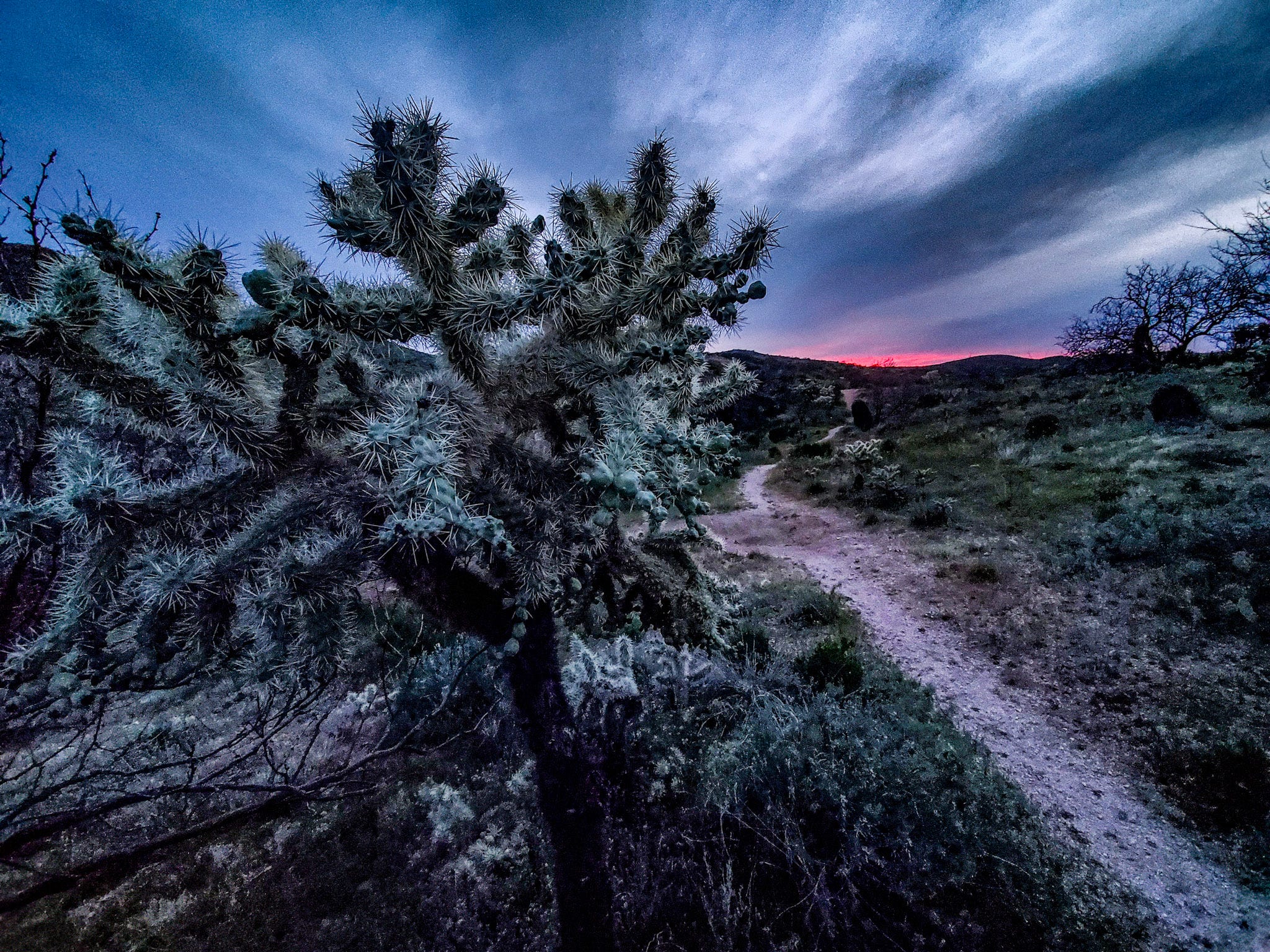
In the months leading up to Sawtooth’s start date I dedicated my entire existence to training. I knew that running was my weakest point and so in March I started the Arizona Trail with the intent to run most of the trail. I would mostly hike the uphills and then jog the downhills. I made it about 200 miles, averaging 35 miles a day before Covid-19 shut down the country.
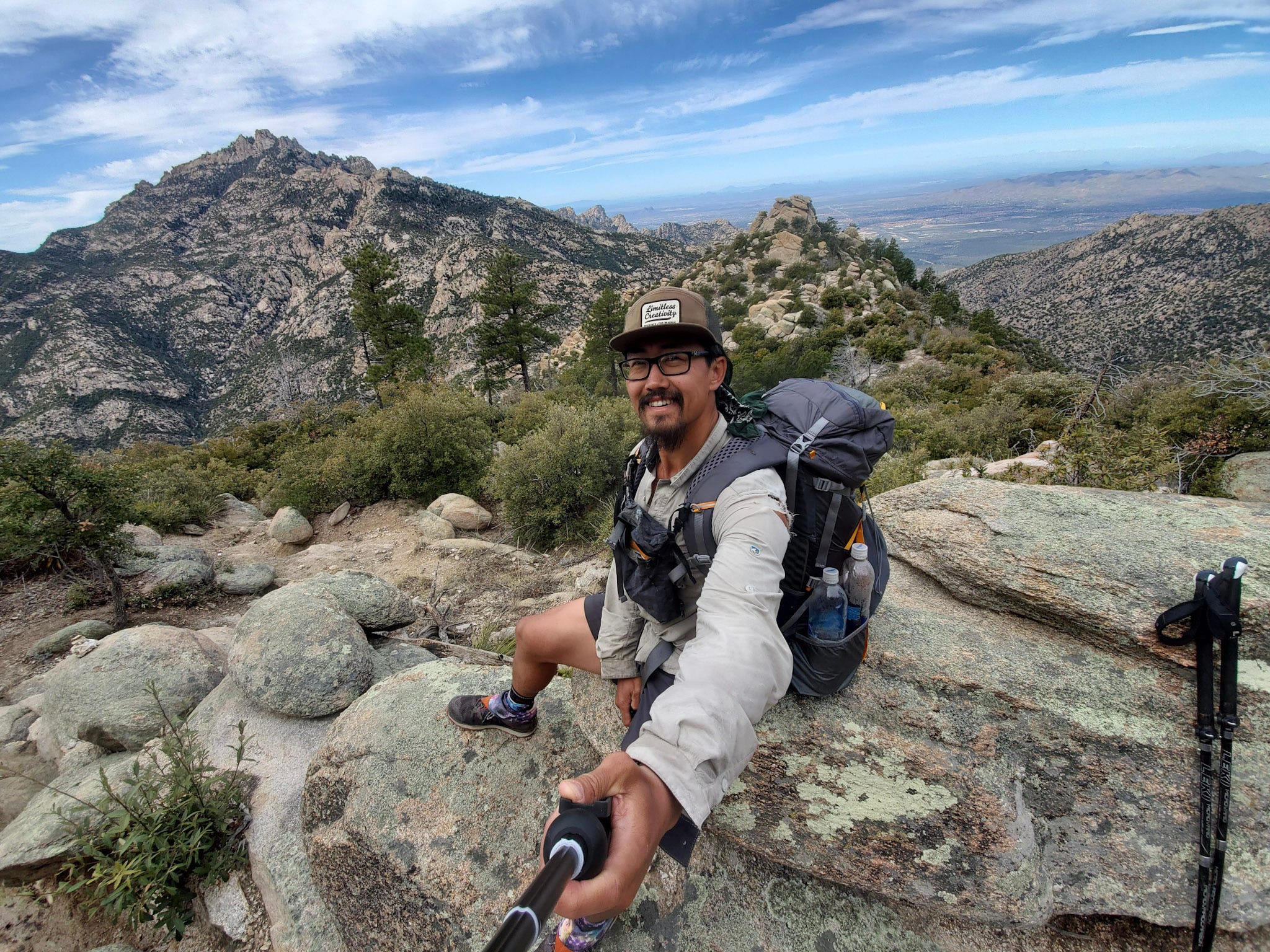
As I entered Tucson I started getting strange comments on my Instagram. You’re pretty disconnected from the world on a thru-hike. There’s not much reception in the wilderness and even when there is I like to keep my phone on airplane mode to save battery and to save my sanity. I remember resting on a soft bed of fragrant pine needles in Saguaro National Park, just south of Tucson, sitting with my back against a towering ponderosa tree watching beams of golden sunlight break through the green canopy. I checked my phone and saw a bunch of messages, “you’re really doing social distancing right!” “Hope you're safe!” “Please come home before they close the roads.”
What the heck? What’s social distancing? I like to joke that thru-hikers invented social distancing. I have photos from my Appalachian Trail hike in 2016 where we’re taking a group photo yet everyone is standing 3-4 feet apart. That’s how much we stank haha.
Hiking into Tucson was bizarre. The streets were empty of cars for the most part. I checked into the Econolodge and the front desk was entirely wrapped in saran wrap. It looked like they had taken a dozen rolls of the white clear plastic saran wrap and just wrapped their whole front desk in it, creating a giant plastic bubble. It reminded me of a college fraternity prank. But this was no prank. Covid-19 had arrived in the US and it was deadly serious.
I first learned about Covid in December on Reddit, but it was just a nameless mystery disease at the time. Videos started popping up of people collapsing in the streets in China. I remember thinking “oh this looks serious.” In February I was in Shasta, California taking an intensive EMT course with NOLS and that was when I first heard the name “Covid-19.” In the evenings after class I’d watch videos from China of people being welded into their apartments and workers in hazmat suits stacking bodies into morgue trucks. “Oh I think this is going to get really bad. Maybe this is what my gut feeling has been warning me about.”
I showed my ID to the front desk worker through her saran wrap. She said I didn’t have to sign anything and slid my key to me through a small hole she’d cut in her defensive shield. Later that day I went to resupply at WalMart and was shocked by the empty shelves. No toilet paper. No ramen. No tuna. No nuts. No peanut butter.
All the non-perishable food, hiker essentials, were gone! I didn’t need toilet paper cause I’d just take it from the motel. That’s what I’ve always done on thru-hikes. If I’m paying $100 for a run down motel room, you can afford to replace a roll of toilet paper.
I managed to scrape together a resupply from what little I could find at the WalMart and Dollar General and continued on the next day. Hitchhiking out of town was surprisingly easy. Maybe people felt more generous during a global pandemic.
I’d hike to Superior, Arizona before getting off trail. In those last days I remember worrying about interstate closures and airport shut-downs. I wanted to get back to a place where I at least had a roof over my head and not be stuck in the middle of the desert with nothing but a backpack and 5 days of food when the world ended. There was a trail angel in Superior that was running a refugee camp of sorts and allowing hikers to camp there while they figured out their apocalypse plans. About a dozen hikers were gathered there when I arrived and more staggered in every few hours, burnt to a crisp by the intense Arizona sun. I met a young woman from Alaska and a couple from Australia. They were going to push on and try their luck because it would be too costly to fly home.
This place really did look like a scene out of a post-apocalypse movie. The trail angel’s sandy field was filled with tents, Darn tough socks and athletic shirts hung from clothes lines, and every few hours another group of bedraggled hikers would limp toward us down the long dirt road in search of salvation. The trail angel was in the process of building his house. His half-finished residence with bare 2x4s and exposed sheets of tyvek fluttering in the hot wind just added to the post-apocalyptic vibes.
SAWTOOTH!!
I left the AZT here and flew back to Montana where I’d live with Laura, the woman I was dating at the time. I’d left my van parked there before heading out on the trail. Thank god I at least had a house to live in and didn’t have to weather Covid-19 in my van.
I spent the next months with a relentless training regime. I would run 4-6 miles Monday through Friday at a slow easy pace. Saturdays I would run 10+ miles and Sundays I’d hike for three hours in the local mountains. One Sunday we went to the local ski resort. The lifts were closed but you could skin up the mountain. Laura skied while I climbed up and down the mountain with snow shoes.
The gyms were closed so I did pull-ups and dips on the porch and goblet squats and KB swings with a 55lb kettlebell I ordered from Amazon. I went to the local high school track to run sprints on Mondays and Thursdays. When I started the regime I timed myself on a 1.5 mile run, the same test that Sawtooth would administer on day one. I ran a 10:45 which equated to a 7:10 mile time. Too slow. Way too slow.
60 days later, on assessment day, I’d shaved a full minute off my mile time. I ran a 9:15 which equated to a 6:10 mile. This was the fastest I’d ever run in my life. And I came in dead last on our crew. Half the crew ran sub 8:30 1.5 miles, or 5:40 miles. I’m not exaggerating. Sawtooth is known for their ridiculously fast runners. I think the fastest guy ran a 7:50 something mile and a half! Crazy!
I did better on the rest of the assessment. At the time I was almost 200 pounds. Built more for strength and power than speed. I managed to pump out 72 push-ups and 68 sit-ups in one minute and do 23 dead-hang pull-ups. This put me solidly in the middle of the pack. Another rookie, a Marine who’d just gotten out of active duty did 28 pull-ups.
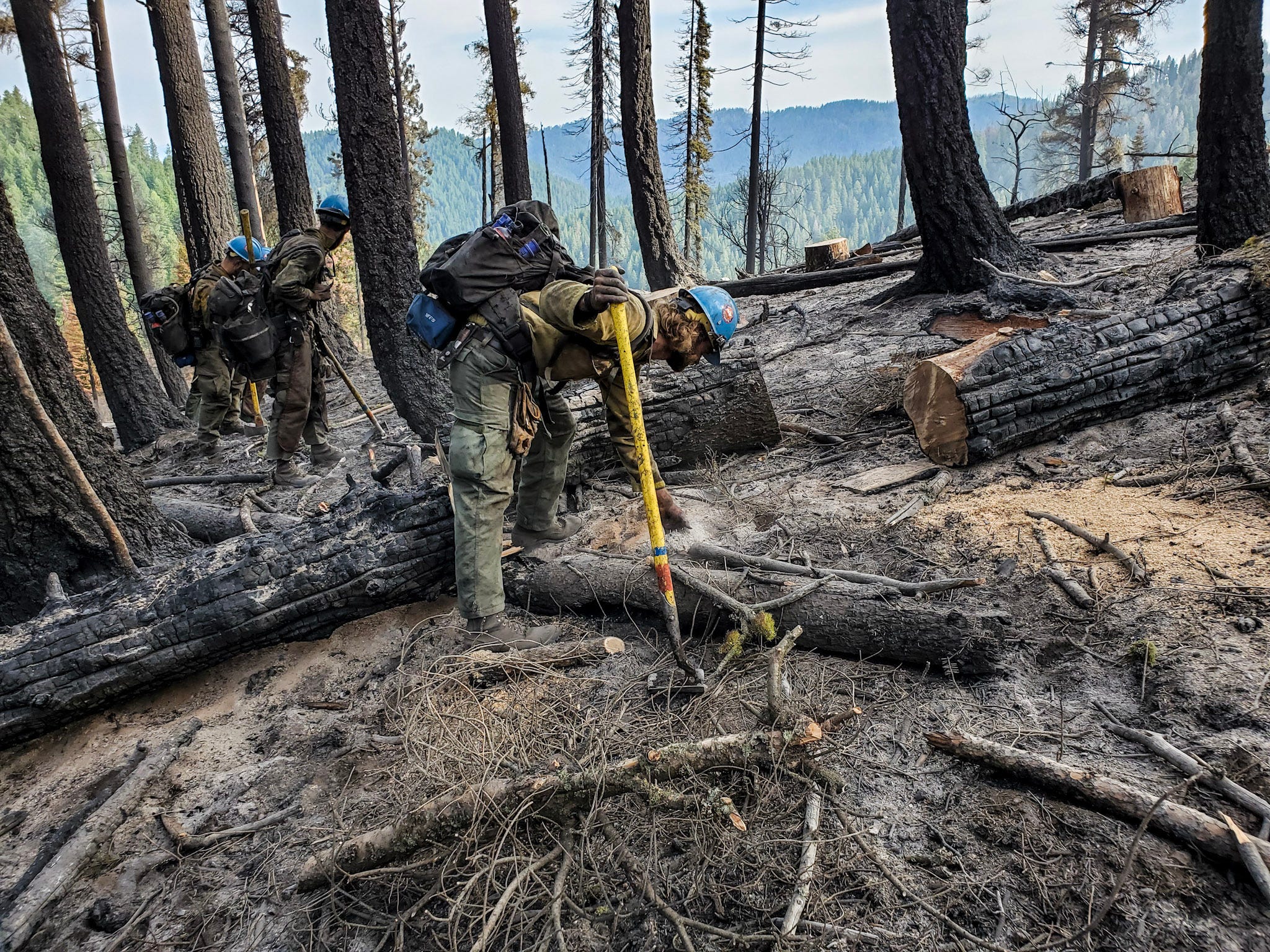
Next we dug 100ft of line. The cut-off time was 45 minutes. I almost failed this. Most people completed the test in 15 or 20 minutes. I’d never really dug line before so it took me almost 40 minutes to finish my line. The supes were very picky, it had to be completely bare dirt with no hint of “bio material”(grass). It’s pretty unusual to be hired onto a hotshot crew in your first year in federal wildfire service like I did. I think the leadership saw my military and thru-hiking experience and knew that I could handle grueling endurance work so they decided to take a chance on me. It also helped that I’d earned my EMT. I would be one of the crew’s medics which meant that I got to carry an additional 10 lbs of medical gear.
Finally we had the pack test. For a normal crew the pack test is just walking 3 miles around a flat track in under 45 minutes. It’s an easy test. But Sawtooth never does anything the easy way so we got to hike 3 miles up a steep mountain with 1,000ft of elevation gain. I was the sixth person to finish with a time of 42 minutes. The slowest finishers came in just under 50 minutes. They had some stern talkings to. Then we continued on with a crew march. It was something around 2 hours and our supe pushed us at a breakneck pace. I suspect he probably pulled an old trick from the Army where the drill sergeants would stuff their packs with pillows to make it look full so that they could run the recruits into the ground while looking fresh and unfazed.
About an hour in, people started falling out and puking. We would stop occasionally and they’d make us hold a squat position or do arm circles while we waited for the stragglers to catch up. Then we’d continue on. My friend Tye said he thought he was literally going to have a heart attack and die. I’m proud to say that I didn’t fall out. I would fall out of every group run for the next month, but I never once fell out of a ruck, no matter how heavy our packs were.
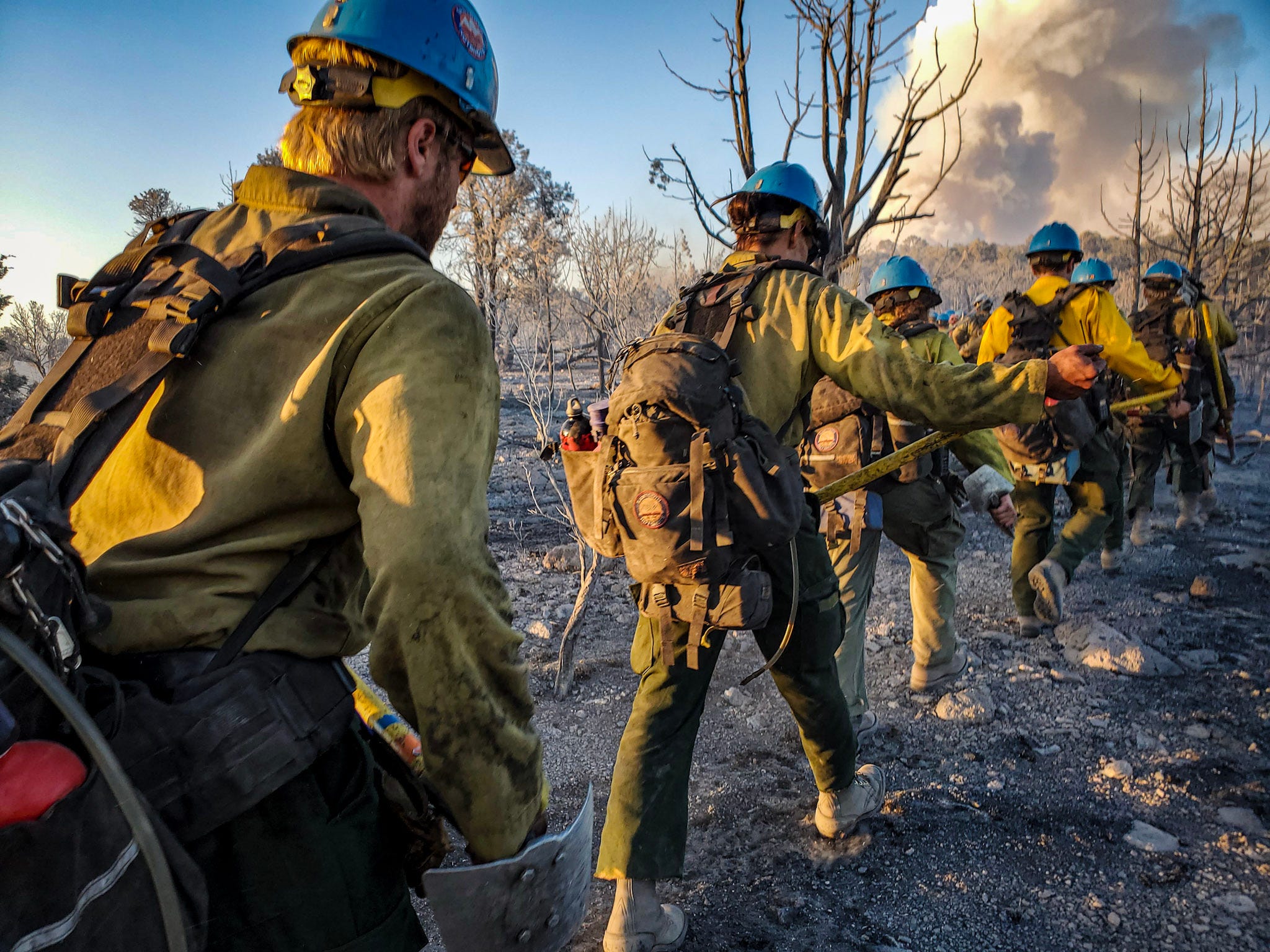
What goes into a firefighter’s pack? Every wildland firefighter is required to carry a 5lb fire shelter at all times. A fire shelter is a last-resort safety device carried by wildland firefighters, designed to reflect radiant heat and trap breathable air when deployed during emergencies. Made of aluminum foil bonded to fiberglass cloth, it forms a small tent-like structure that the firefighter can crawl into when escape routes are cut off by rapidly advancing flames.
Each year a few firefighters are forced to deploy their shelters. Sometimes it saves their lives. Often, it only preserves their corpses from being turned to ash. In June 2013, 19 members of the Granite Mountain Hotshots died in the Yarnell Hill Fire in Arizona. The crew was overrun by the blaze when high winds caused the fire to overtake the crew, leaving them with no escape. Despite deploying their fire shelters, the intense heat of the fire proved overwhelming. Investigations after the tragedy would estimate that temperatures reached 2,000 degrees. Unsurviveable even with a fire shelter. The lone survivor had been serving as a lookout in a different location when the fire trapped his crew. This incident represents the greatest loss of firefighters in a wildland fire since 1933.
We would often carry two gallons, or 16lbs of water, because we would work an entire 16 hour shift without resupply. We would carry 3 liters of fuel and bar oil for the chainsaws, an additional 7lbs. We’d carry our sack lunches, often sad affairs that’s the same as thru-hiking food. The favorite amongst firefighters was the uncrustable PB&J sandwiches for some reason. I hate them to this day. I had my 10 man first-aid kit which weighed about 10lbs. Throughout the season I would surreptitiously ditch things. Crush activated ice pack, eye-wash fluid, extra bandages. Fuck that, too heavy. If it were up to me I’d just carry three tourniquets and call it a day. This would come back to bite me in the butt after our supe asked for both an ice pack and eye-wash fluid on separate occasions and then made me inventory and refill all of our medic bags.
We’d carry headlamps with extra batteries because we’d often work well into the night. It’s not uncommon for firefighters to pull 48 hour shifts when first engaged on a fire. Then we’d have our tools and the sawyers would take turns carrying the heavy chainsaw. I tried to get my pack down to the bare minimum knowing how important a light pack was from thru-hiking but still my pack was never below 50lbs leaving camp. It was a blessing and a curse to run out of water. At least your pack was lighter, but also now you’re out of water and don’t know when you’ll get more.
Speaking of lighters, every firefighter carries a lighter with them. It is a vital piece of gear and has saved more lives than even fire shelters. A lighter will let you back-burn around you, a last-ditch effort when a wildfire is barreling toward you and you have nowhere to escape. If you can burn the vegetation around you before the main fire arrives then you can be protected, because what has burned once cannot burn again.
Manifesting a Hotshot Crew
I really do keep getting side-tracked. I wanted to talk about Sawtooth because I manifested this job.
In 2018 I started my bike trip in New Mexico intending to bike from Albuquerque down to the Mexican border. Mostly because I could ride a train from Columbia, MO to Albuquerque and that made the logistics of getting a bicycle to the border easier. What I didn’t account for were the terrible winds in New Mexico or the tendonitis I’d develop in my knee due to my lack of biking experience.
Near Grants NM I experienced headwinds so strong that I had to pedal going downhill. My knee was killing me and I was moving slower than I would on a bike than if I were on foot. “This is stupid.” I hitched back to Albuquerque to rent a car and drive myself and my bike to Arizona.
New Mexico is a notoriously difficult place to hitchhike. The state is one of the most impoverished in the nation and cities like Albuquerque are overrun with opiate and meth addicts. It’s no coincidence that Breaking Bad was set in the ABQ. When I offloaded my bike from the train I had no less than three strangers tell me to not leave my bike anywhere in Albuquerque or it would be stolen. That first day biking out of town I noted a strange pattern. I would pass a tattoo parlor. Then a bail bond shop. Then a group of cops with their lights on interacting with someone. Then another tattoo parlor. Another bail bonds shop. Another group of cops with their lights on making an arrest. It went on like this for block after block.
You can understand why people would be hesitant to pick up hitchhikers in such an environment. I stood on the side of the interstate with my thumb out standing next to my bicycle. Hundreds of cars sped by. Sometimes someone would wave or give me a thumbs up. Most avoided eye-contact. An hour passed. Two hours passed. No luck. I decided to try something different. I put my hair down so that it would blow in the wind and I would look like a woman from far away, and I started sending metta to all the passing cars.
Five minutes later a big truck stopped. I don’t think it was the metta that stopped the truck because when I walked up to the window the man had a look of puzzled shock on his face. I think he was expecting to see a woman. I loaded my bike into the back and hopped in the passenger seat before he could change his mind.
As he drove he filled me in on his life’s story and what an interesting story it was! He was part of the Zuni tribe in Arizona and lived on the reservation. He said he’d been an alcoholic for many years and hitchhiked from Arizona all the way up to Alaska and “shacked up with a lady up there.” After a few months he got “tired of the ole gal” and hitchhiked back to the US and ended up on the boardwalk at Ventura Beach in California. He said he had an old guitar and would play on the boardwalk and panhandle money by day then he’d buy cheap liquor and drink until he passed out each night.
One day while he was panhandling a man came up to him, gave him two bottles of Jack Daniels and a pre-paid cell phone. The man told the Zuni to drink both bottles and when he felt sick to call him. My driver followed the instructions. He drank himself sick and then called the man, who gave him a place to stay in his house and took him to alcoholics anonymous meetings. My driver said he’d been sober for five years now and worked as the superintendent of the all Zuni hotshot crew.
“What’s a hotshot?” He went on to explain his job. How hotshot crews were wildland firefighters tasked to fight fire in the most dangerous and inhospitable environments. That hotshots would be sent into terrain that other crews simply couldn’t reach and were expected to cut more line and do more work than any two regular crews combined. He told me it was a dangerous job and you could make good money in a summer because of all the overtime, that you’d work 14 to 21 days at a time and only get two days off before being sent out again. He warned me that it required grit and determination and most people didn’t have the physical or mental strength to survive a season.
“That job sounds awesome, I’d like to be a hotshot one day.” That day I visualized myself working as a hotshot, doing the dangerous and dirty work described by my new Zuni friend. He said he was feeling an urge to drink as he drove by and that’s why he picked me up. He decided to distract himself with a hitchhiker instead of drinking. He didn’t know that he’d forever change the trajectory of my life with that simple ride and by sharing his powerful story.
So it was pretty strange that just two years later I would be hired onto a hotshot crew with zero federal wildland firefighting experience. This is unheard of. Every other rookie on our crew had multiple years working with engine or type 2IA crews. I think I manifested that job.
To make things even more strange, the first fire we fought that season was the Tadpole fire in New Mexico. This fire started around Tadpole ridge. The Continental Divide Trail literally traverses Tadpole ridge. Hell, a late season NOBO might’ve even been responsible for that fire. On our way to the fire we drove on the same interstate where I’d been picked up by the Zuni Hotshots superintendent. More weirdly, we fought that fire alongside the Zuni Hotshots. I never had a chance to see if the man who gave me the ride was still their supe, and I probably wouldn’t have recognized him even if I did meet him again, but what a strange and serendipitous series of events, right?
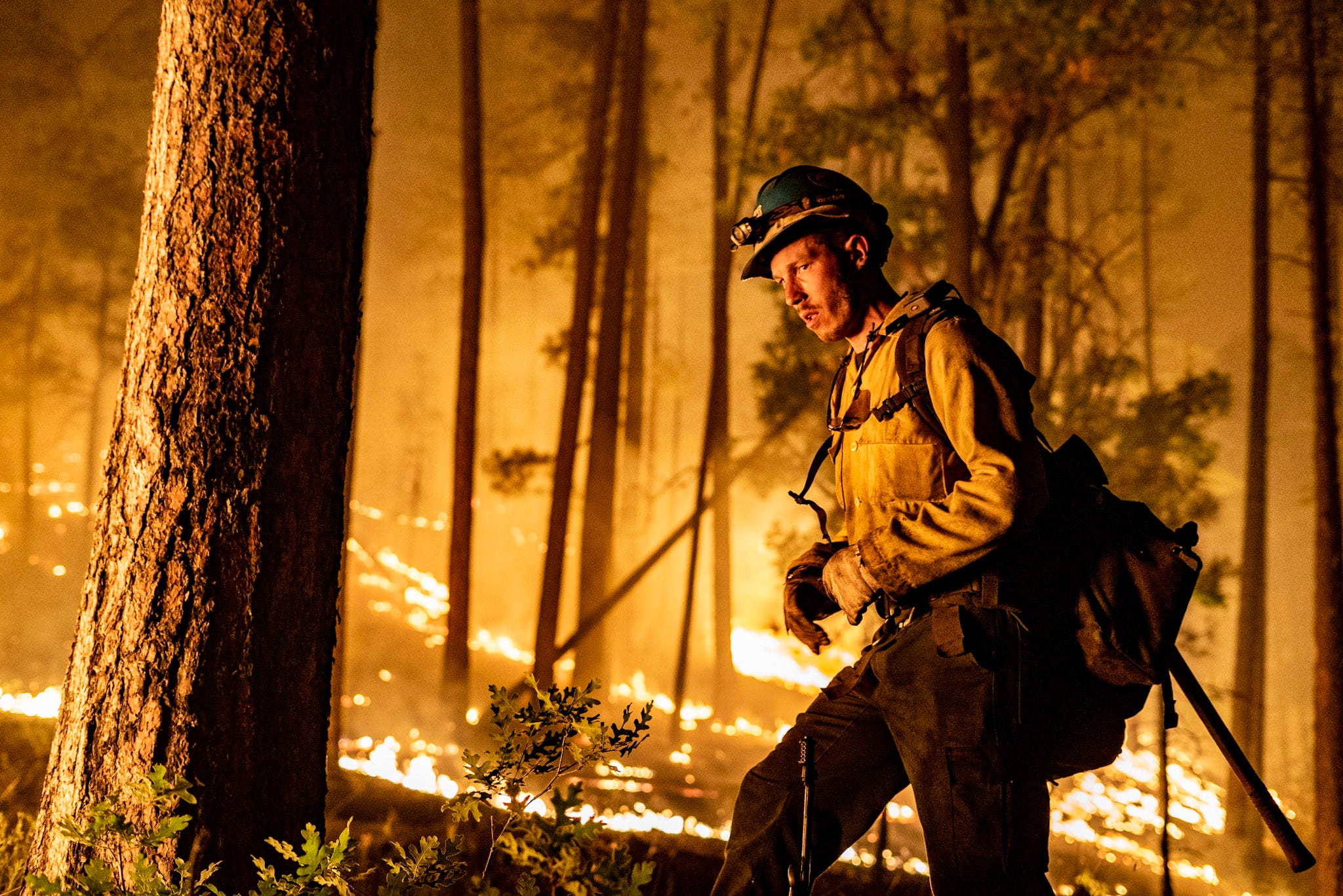
One last story before I stop writing for today. On that fire we kept hearing rumors of a hermit. “There’s a hermit that lives in the woods here. We need to dig line around his house and protect his buildings.” A hermit? In the middle of a National Forest in New Mexico?
I didn’t meet the hermit that year but I would in 2021 when I hiked through this section on the CDT. "The Hermit" or "Ghost of the Gila” established his off-grid home in the heart of the Gila National Forest decades ago after turning away from conventional society. He somehow got connected with a person that owns that parcel of land which is boxed in by National Forest and got permission to live on that land. “The hermit” has a big mailbox set-up on trail with a trail registry and directions to his abode. He loves to get visits from hikers, about the only visitors that he ever sees out in that remote part of the Gila, and will understandably talk your ear off.
He lives alone and is almost entirely self-sufficient and completely off-grid. He only goes into Silver City once a year to purchase supplies. He’s infamous for getting hikers drunk off his homebrewed beer and in recent years hiker’s have been warned off of visiting him because all he wants to talk about now are Covid and anti-government conspiracies. Sadly, even off-grid hermits are not immune to the far-right mind viruses.
The older I get the more I see time as a fractal. The past reverberates into the future and the future into the past. My father was imprisoned without due process under a repressive authoritarian regime and now I’m fighting another repressive authoritarian regime in the country which I fled to. I was given a ride by a firefighter in New Mexico and then would go back to fight fires alongside his crew, and then hike through the very same forest and meet the hermit whose off-grid home we saved from the fire. Time echoes and it rhymes. I fear that I will discover that my gut intuitions to learn survival skills and guerilla warfare tactics do come from the violent echoes of an apocalyptic future. I hope I’m wrong, but my gut says that we won’t be so lucky.
This is part of a book I am writing about my life story. Thank you for reading. I recommend taking a look at my guide on how to prep for martial law/civil unrest. This is the danger I’m talking about when I wrote that guide. I hope I’m wrong but the more research I do on this topic, the more alarmed I become. Don’t be scared. Use this to motivate yourself to action. Build community. Band together. We outnumber these hateful folks 1,000 to 1. But the problem is they’re organized into terrorist cells, they’re armed, and they have comms with each other across the nation. We need to organize like they have. Not so that we can spread violence and hatred, but so that we can defend each other and defend our marginalized communities.
Where is the best place to be in the USA if I have no way to leave?
My senses say the same and you are amazing! Please keep going, we will survive 💖💖💖