
I just got back from 16 days exploring the rugged mountains of Kyrgyzstan and Kazakhstan. It was a much needed reset.
I feel refreshed and happy. I’m excited for the future. I don’t feel like I’m hanging on by a thread anymore.
What a stark contrast to how I have been feeling. I only realize from the contrast of this spacious, positive, and embodied space that I inhabit today the sheer volume of darkness I was holding. I haven’t been doing well and I didn’t want to face that truth.
I think partly because I didn’t feel like it was OK to acknowledge my suffering. Afterall, what are my petty struggles when compared to Alvarado Borges, an asylum seeker who was wrongfully sent to CECOT because DHS claimed his rainbow colored autism awareness tattoo was proof that he was a gang member. What are my struggles when compared to Yusuf, a Palestinian who lost 30 members of his family in a single night during Israel’s genocidal campaign in Gaza in 2025?
It’s so difficult to not be consumed by darkness when you see images federal agents executing unarmed civilians in our streets. When you read news of families at home, children in schools, and sick patients in hospital beds vaporized by bombs made in the USA®. When you hear the horror stories of torture and abuse that routinely takes place inside the for-profit ICE concentration camps.
But if we are to hold the line against the conflagration of evil that threatens to engulf the world then we must guard our fighting spirit. To allow our revolutionary fire to be doused is to do a disservice to all the comrades around the world who have sacrificed so much to hold the line.
It’s so cliche, but I do believe that hope is more powerful than fear. That love is more effective than hate. My work is qualitatively better when I am in a good place. We will not act if we hold no hope in our heart, and now that I’m refreshed and renewed, I’m diving back into the resistance with a vengeance. Back on the line, ready to fight fire with fire.
Horse Trek in Kyrgyzstan
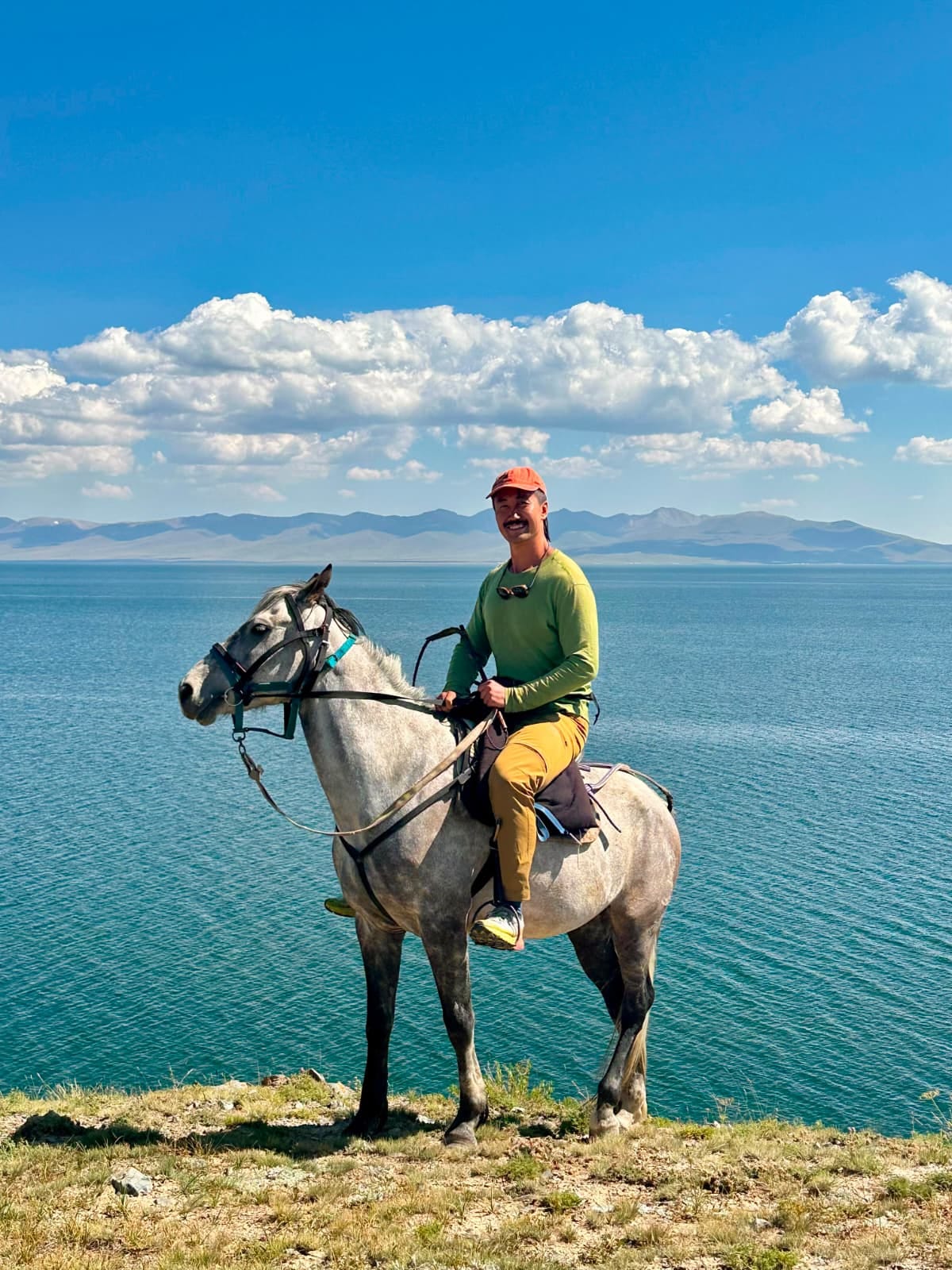
Our original plan was to have a relaxing beach vacation in Sri Lanka, but all the flights we checked had a layover in the UAE or Qatar and I thought that’d be too risky given the ongoing war of aggression against Iran.
Then I came across a reddit post from a hiker who’d spent a month in Kyrgyzstan and the scenery looked spectacular. Tickets were cheap so the beach vacation turned into a central Asian mountain expedition!
I had no idea what to expect and felt stress about navigating the former Soviet-bloc country before we departed, but as soon as I stepped onto the Survivor’s Trail in Ala-Archa National Park I felt right at home and my stress dissolved.
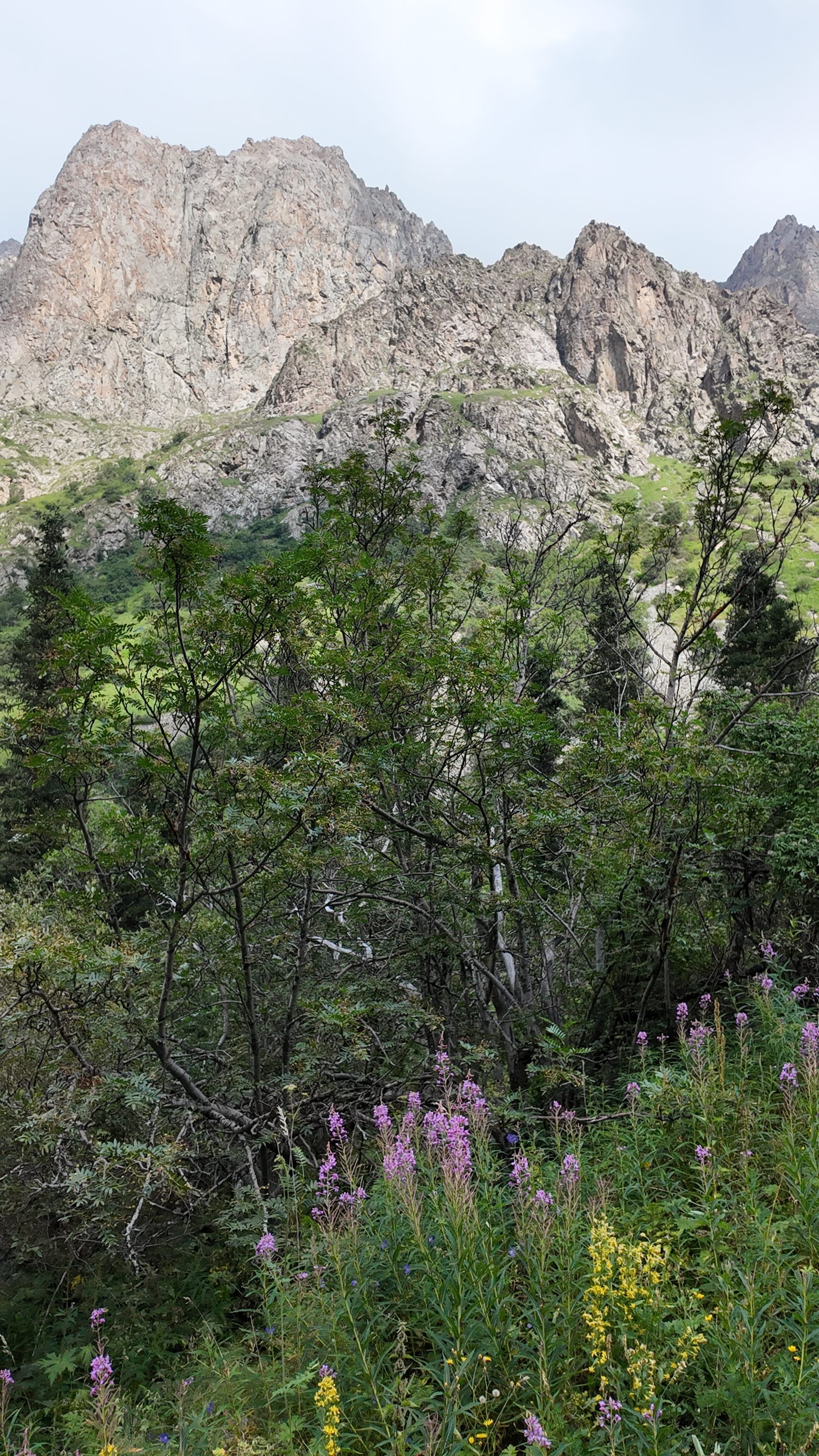
We spent three days hiking in the park. Ala-Archa is easily accessible from Bishkek, the capital of Kyrgyzstan. Busses run all day from the city center directly to the park entrance.
Ala-Archa reminded me of Glacier National Park. You’re surrounded by towering mountains, which top out at over 16,000ft, and the valley is bisected by a raging glacier fed river. The well-maintained trails start in large conifer forests and as you gain elevation transition into vast green meadows dotted with purple, red, and yellow wildflowers, faded and wilted from the late July heat. Their color must be phenomenal in the spring.
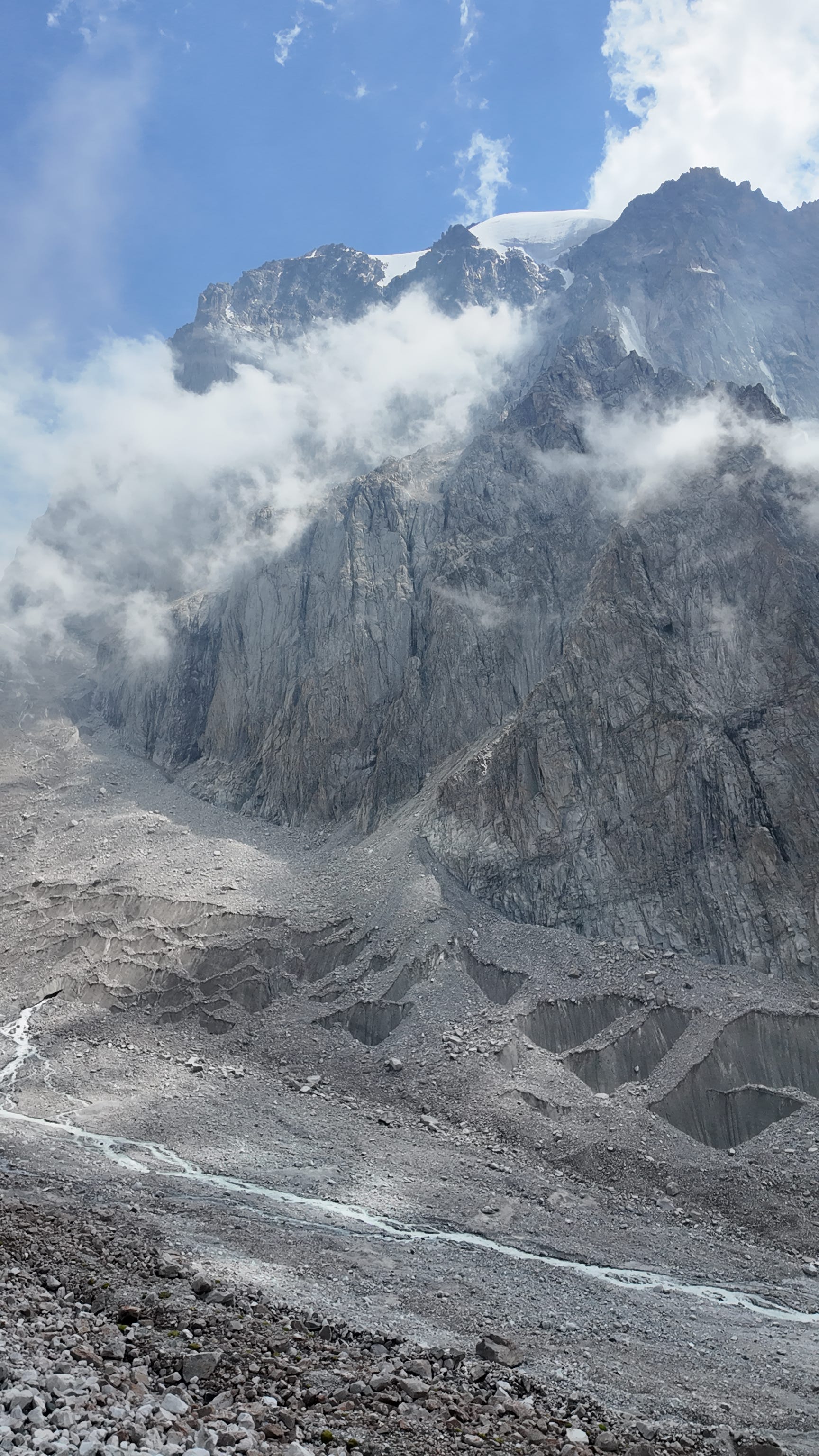
And as you push higher the terrain changes again into boulder fields and rocky scree. This reminded me of going over passes in New Zealand on the TeAraroa. The trail here often meandered into multiple branching goat paths, created by hikers doing their best not to fall to their deaths or the Mid-Asian Ibex, a species of mountain goat native to the mountains of Central Asia.
After Ala-Archa we took a mini-bus to the village of Kyzart. The drive there was a lesson in non-attachment. I’m not exaggerating when I say we came within feet of a head-on collision moving at 70mph every five to ten minutes. The locals in the bus seemed relaxed and resigned to their fate so I tried to emulate them.
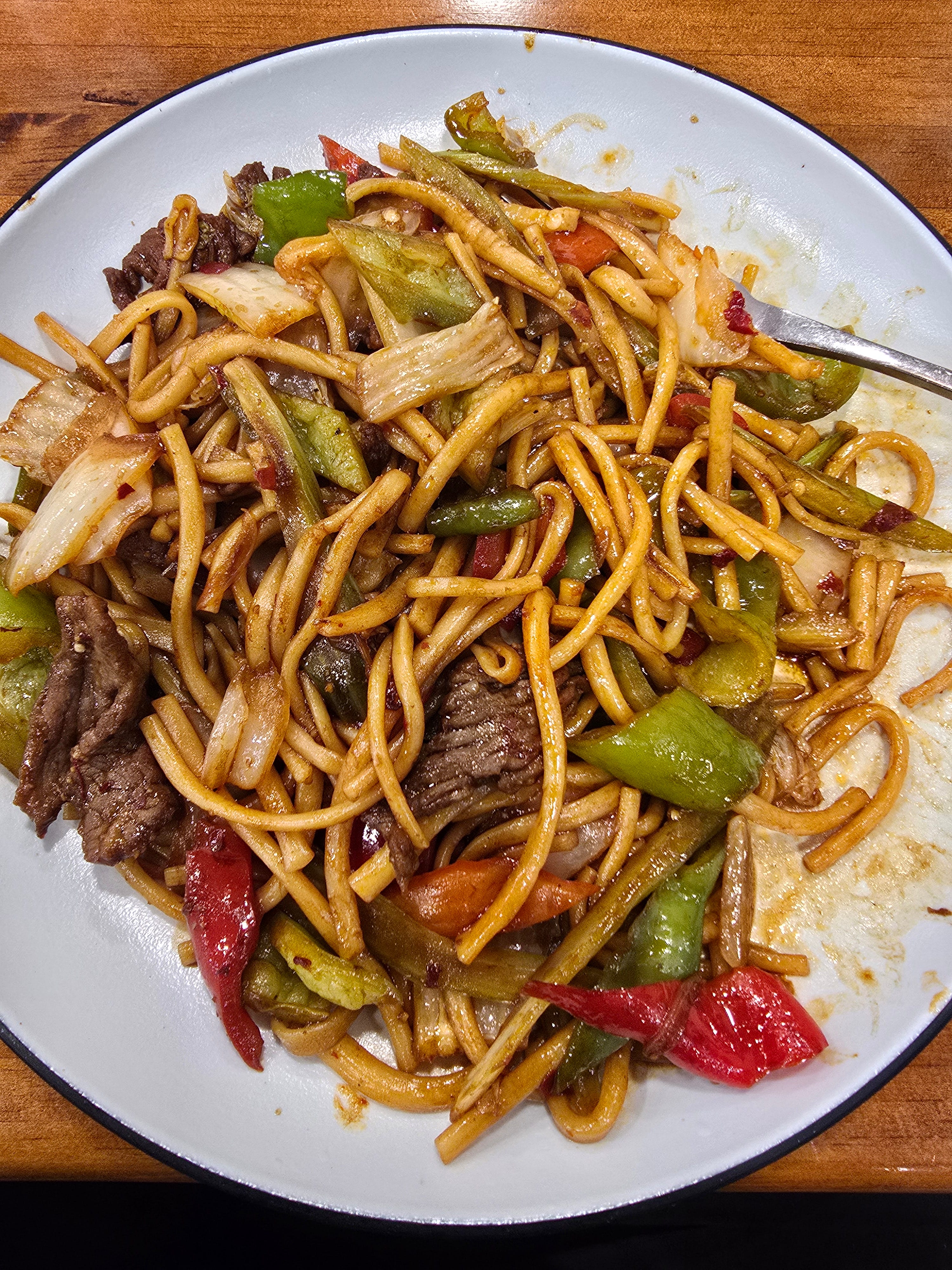
We stayed in a guest-house that night in Kyzart and were fed a traditional home-made Kyrgyz meal. The food overall on our trip was good and filling but simple and plainly spiced. The main dishes of Kyrgyzstan are Lagman, noodles pan-fried with meat and vegetables. Kuurdak, stir-fried beef and potatoes, my favorite! And Plov, steamed rice with meat. Our guest-house didn’t have plumbing so the bathroom was an outhouse with a hole in the ground, guarded by a sad looking goat that had a noticeable limp.
That night I fell asleep on a pile of blankets laid out on the floor. Through the window I could see the moon-rise over the mountain-range that we would climb the next day. Falling asleep I experienced the familiar thrill of adventure that I’ve come to associate with thru-hiking.
The next day we set off on a three-day horse-trek to Song-Kul lake. You’d think that you’d need prior riding experience before being allowed to go on a three-day trip into the mountains on a horse, right? Not in Kyrgyzstan! I was given the largest horse because I was the heaviest person in our group. The matriarch of the house, who was the only one that spoke any English, handed me the reins and then gave me my riding lesson.
“Hold rein tight. Say chuu-chuu for go. Say drrr-drrr for stop.” Lesson over, she motioned for me to put my foot in the stirrup and pull myself up onto the saddle.
I didn’t feel any nerves leading up to the horse-trek. I don’t know why, I guess I just assumed everything would work out and that horse riding couldn’t be that hard if they let complete beginners on these trips. Well, all the nerves I hadn’t been feeling came flooding into my consciousness as I felt my horse shift underneath me; the reality that I was now at the mercy of a nearly 1,000lb animal hit me like a kick from a horse.
The matriarch dropped my horse’s lead after I settled into my saddle to go give others on our tour their riding lesson. Immediately, my horse danced out into the road, away from the rest of the group. I pulled the reins. “DRRRRRRR DRRRRRRRR.” The horse cantered forward, away from the group. My adrenaline spiked, I kept my mind on my breath and told myself to not panic.
I pulled the reins back harder. “DUUUUURRR. DUUUUUUR. DER! DER!” Out of desperation I tried speaking to the horse in German. No dice. My horse didn’t understand German and cantered down the road, its jolting gait almost bouncing me out of the saddle.
“Johan! Johan! Left left Johan!” The matriarch shouted at me, rowing in the air with her left arm in a pantomime. She’d mixed up my name and started calling me Johan at breakfast.
I pulled the reins left. My horse continued down the road, away from the group, but now sideways.
“DURRRR DURRR DURRRR!” I yelled at the horse. I pulled the reins harder to the left. The horse slowed and started walking sideways and backwards toward the right side of the road, whose pavement terminated in a deep canal. Roads in Kyrgyzstan are paved just wide enough for two vehicles. Shoulders, when they exist, are just dirt.
Potential futures flashed through my mind. The horse, walking sideways, would be blind to the canal and fall in, crushing my legs against its body. The horse, spooked after stepping into empty air, would throw me off the back and my head would smash open on a rock like a watermelon. The horse would jerk my reins out of my hands and gallop into the mountains, I’d never be seen again, and the next group of tourists would receive a longer tutorial with my story shared as a cautionary tale in what happens when you “durr” instead of “drrr”.
As usual, reality didn’t live up to my worries. My horse stopped when it reached the canal and begrudgingly turned back toward the group. “Chuuu-chuuu. Choo-choo. Go. Forward. CHUUUUU.” I lightly kicked the horse’s sides, a technique I’d learned from watching Knight of the Seven Kingdoms.
The horse ignored my protests and stood placidly on the side of the road while the rest of the group watched me with expressions ranging from bemusement to concern. It felt like the horse was making an example of me, “see this you lot, this is what happens when you join a horse-trek without any experience.” I choo-choo’d some more. The horse started eating grass growing on the shoulder.
Finally, a 15 year old kid, one of our three guides, rode to my horse and grabbed my lead. He would tow-me behind him for the next two hours while everyone else choo-choo’d their own way into the mountains.
Bouncing along next to my babysitter I learned about his life. He’d been riding since he was five and was born in Kyzart. I learned that he loved rap and his favorite artist was Eminem. I learned that his favorite sport was football- he played as a goalie with his friends in Kyzart and he’d supported Spain in the World Cup. He had an easy smile, wore an old base-ball cap and black hoody in the 80 degree heat, was lanky, and taller than the other guides by a foot. He didn’t have a girlfriend but considered his two-year old horse his son. Having exhausted his English we rode to the beat of Slim Shady.
A kind Swiss woman who actually had previous riding experience traded me horses at our first break. She taught me that it’s vital that the horse knows who the boss is, and that my old horse definitely knew that I was not the boss and it was probably too late to change that. To be fair my horse, a large male, was the most energetic and temperamental of our group. My replacement horse was much easier to control. I still had difficulty getting it to go when I said “chuu”, but it would at least stop when I pulled back on the reins and didn’t want to wander off or run ahead of the pack like the large male had.
It probably didn’t have the energy to rebel, the poor thing. My new horse was at least 150lbs lighter than the big male and now it had to carry me up the mountain instead of the slim Swiss woman.
We reached camp in the early afternoon. Our group of eight settled into a yurt while other groups trickled in throughout the day and filled up the other three Yurts on the property. An old German shepherd guarded our encampment and chased off stray cows and horses. That night the younger guides played a mixture of Russian, Kyrgyz, and American dance music streamed from a Starlink unit. The young guides gathered the tourists into a big dance circle while the older guides sat in the background and smoked. We fell asleep to the gentle rhymes of Slim Shady.
The next day I felt more relaxed, confident, and rode with more ease. Outdoors, on an adventure, roaming the vast rolling hills on a horse like my nomadic ancestors- I was in my element. I was born in northern China, near the Gobi desert, and have Mongol blood in my veins- the same as anyone whose ancestors lived in northern China and thus didn’t benefit from the protection of the Great Wall raiding Mongol riders. The city I grew up in had a sizeable minority population of Uighur Muslims and many of the lamb and beef dishes in Kyrgyzstan reminded me of dishes from my childhood.
Around noon we crested a 11,500ft pass, the high-point of the trek, and descended to the next camp near Song-Kul lake, an alpine lake that sits at 9,000ft.
That afternoon we watched our guides play Kok Boru, a traditional nomad sport played with the headless corpse of a dead goat. In Kok Boru two teams compete to first gain control of goat corpse and then try to throw the body into a tire to score a point. The game was brutal and difficult to watch but also riveting- the riders displayed exceptional athleticism as they wrestled over the headless corpse of the dead goat while riding at a full gallop.
It was difficult to wrap my head around the casual brutality of the game, but also, who am I to judge from my atop my high-horse? I’m sure it’s even more disturbing for the Kyrgyz nomad to try to comprehend that the U.S. has imprisoned a staggering 51,000 humans, most of whom have no criminal history, and have committed no crime other than not being a citizen inside for-profit detention centers in July alone.
After the game the goat was butchered and the meat went into a cook-pot. The skin was dried and will be used to insulate Yurt walls. The goat got to live a free life roaming the mountains, and when it was time to be butchered the Nomads did it themselves. I, on the other hand, pay strangers to raise animals in horrific factories, pay strangers to kill and butcher the animals, all so that I can eat them without thinking about the pain and suffering that the animal experienced. So, on the balance, I think the Kyrgyz nomads respect and treat animals much more humanely than I do.
I’ll end it here for now and make some videos about the trip this week. It’s a beautiful country - highly recommended!
And finally, take care of yourselves.
You can support my work with a one-time gift using the button below or this link. My work is entirely supported by readers, I receive no money from advertisers, politicians, or dark-money funds.
What an amazing, strikingly beautiful terrain you both hiked “Johan,” :) and what an adventure! Time out to enjoy our beautiful earth and to see how others live is a gift to the self and such a powerful connection. I’m thrilled you were even able to connect to your birthright. How cool is that! So glad you took the time to honor yourself with compassion. It’s hard to be in this world with all the suffering around us that cannot be ignored. We can’t control the monsters in this world; we can only do what we can. Glad your heart and spirit are renewed because yours are noble ones. Thank you for being in as John Lewis would say, “in the good fight.” All the best..Jenna (I’m still thinking about the poor goat with the limp….:( )
Great story! But it's reins, not reigns. As a horse person that made me crazy reading it.